
With an aim to understand the rising trend of sustainable travel and top motivators and hindrances in the selection of green choices, Blackbox Research surveyed more than 4,600 travellers across six Southeast Asian countries—Indonesia, Malaysia, Philippines, Singapore, Thailand, and Vietnam. The following content is part of this detailed study, ‘Rise of the Sustainable Southeast Asian (SEA) Traveller’, which is aimed at understanding the rise of sustainable travel in SEA, while also taking a deep dive into each country’s trends.
As Thailand gears up to reopen bars, pubs and karaoke clubs from June 2022 onwards in some regions, after more than a year-long shutdown, the popular tourist destination is hoping to recover its pandemic-incurred losses. This move, apart from eased travel restrictions, is likely to lure more foreign tourists in the upcoming travel season. As the Southeast nation rolls back most of the border restrictions, it is hoping to welcome about a million tourists per month in the post-pandemic phase. Experts are anticipating that the sustainable travel trend will pick pace in the post-COVID era, with more travellers becoming mindful of their carbon footprint.
With the country seeking to woo back more tourists, the following findings from our latest survey can help sustainable travel and tourism organisations strategically position their products and services in Thailand.
Environment, local culture, and tradition are key priorities for Thais
Our research suggests that Thais are highly aware of their travel choices and a majority of them value sustainability while on a holiday.
While 90% of Thais believe in preserving the cultural and natural environments of a spot so that they can be preserved for the future, 83% choose travel companies that are conscious of the urgency to make travel and tourism a more sustainable activity. Likewise, nearly 4 out of 5 (83%) prefer visiting cities/countries that prioritise waste and pollution reduction over tourism revenue. For 89% of Thais, strengthening laws and regulations aimed at preserving/protecting natural sites/areas is the need of the hour.
So, what really are the top priorities of Thai travellers when it comes to choosing a sustainable travel option? Our data suggests the following:

Thais are supportive of choosing alternative modes of transport
Conscious of their carbon footprint, while on a vacation, 85% of Thais opt for environmentally friendly modes of transportation like mini-buses, e-bikes and bicycles, etc. to minimise carbon emissions. Similarly, 75% of Thais choose to travel less and prefer going to nearby destinations for a trip, so that they can reduce pollution and cut down on carbon emissions. In fact, 87% of Thai respondents feel it is essential to develop alternative transport options like electric airplanes, electric vehicles, and shared mobility options in the tourist-led nation. Furthermore, nearly 9 out of 10 (89%) of Thais believe it is important to encourage cross-sectoral partnerships to enable sustainability-focused innovation in the field of travel and mobility.

These findings are particularly important for travel companies and tour operators, who can help in encouraging more travellers to choose inexpensive, eco-friendly ways of commuting like songthaews, tuk-tuks, vanpools, etc while exploring its beautiful locales.
While trying to understand people’s attitudes towards the environment and sustainability, our survey revealed some of the key motivators that help people make responsible travel choices in Thailand. Awareness is evident from the fact that 44% of Thais researched all green travel options in advance before heading out for a holiday and tried understanding the pros/cons of making sustainable travel choices. Other interesting insights from our survey include:

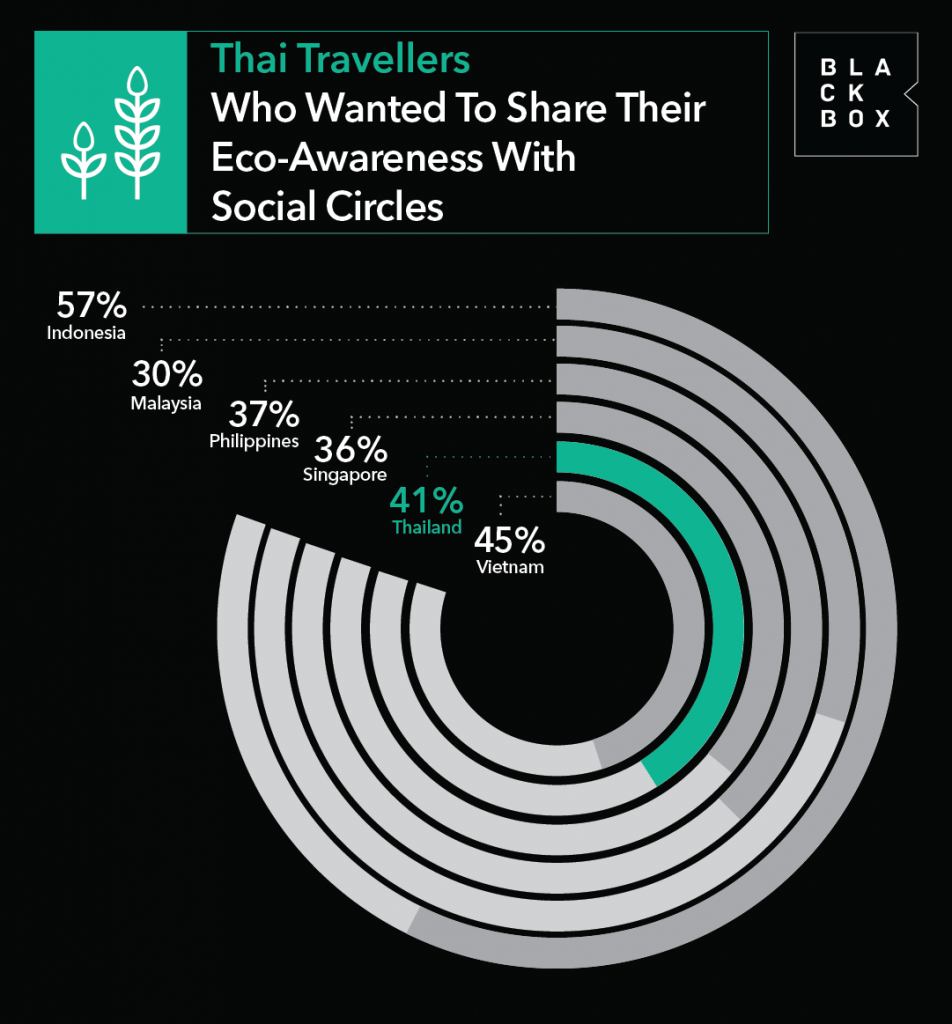
As awareness around the environment and sustainability is gaining momentum in Thailand, it is important to note that social validation is also important for a good number of Thais who want to share their eco-consciousness with their social circles. This particular finding can be helpful to tourism operators, who can package their green offerings in a way that encourages more travellers to not just make a responsible choice, but also share it with their peers through possible referral schemes.
Lack of access, high costs: Key hindrances in making green travel choices
While 82% of Thais like to stay updated with information related to responsible travel, green travel, and eco-tourism options, there are still others who find greener options quite constraining. Our survey highlights that access and cost were among the key barriers along with transparency and a complicated booking process among others.
A quick look at some other top hindrances that prevent Thais from making responsible travel choices:

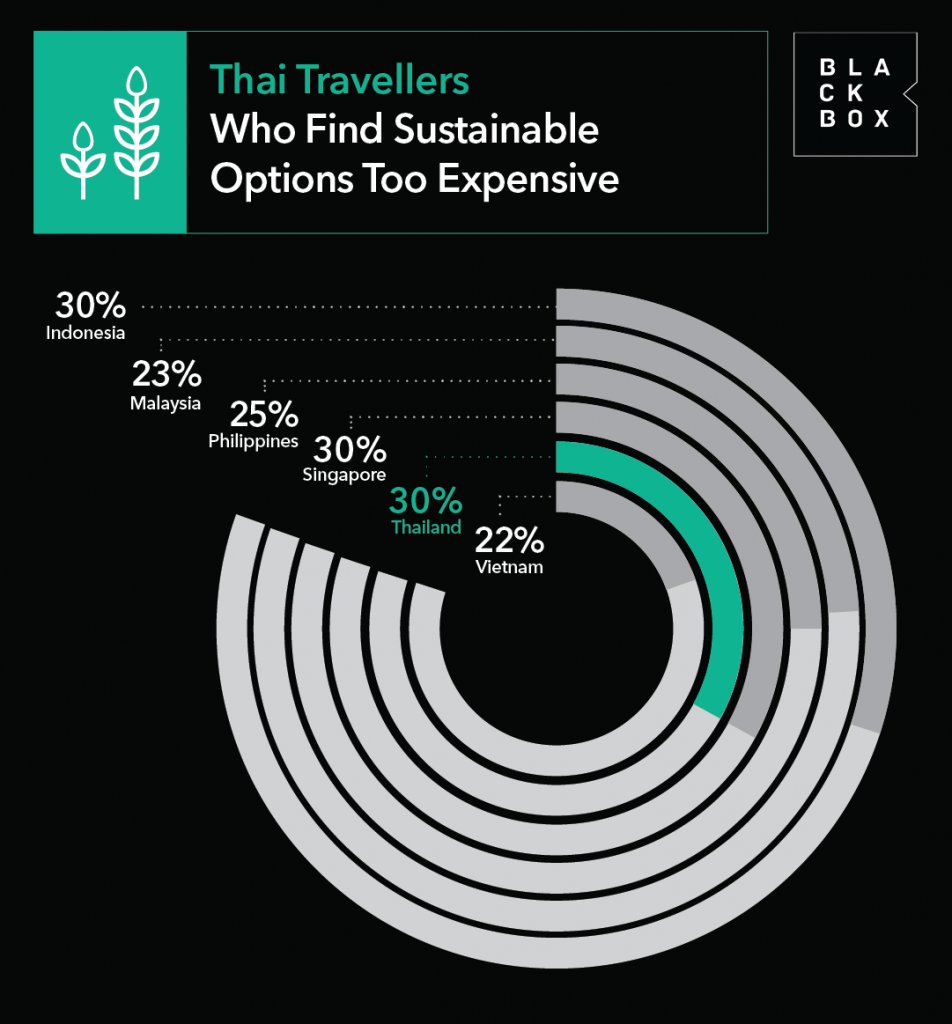
While Thais are ready to embrace greener options, 32% feel none of the available ones is adequate enough to woo them. Likewise, nearly three out of ten (30%) respondents found sustainable travel options/alternatives too expensive.
Keeping the consumers choices in mind, tourism operators should make a note and aim at making greener travel options more accessible and easier to book. Not just this, they can even include attractive discounts and offers, and make these options more affordable to attract more travellers to make sustainable choices.
A glimmer of hope for the tourism sector in Thailand
With the rise of mindful travellers, who are looking for ways to reconnect with nature and travel more responsibly, Thailand is looking to offer new opportunities for sustainable travel in the country.
The Tourism Authority of Thailand (TAT) had recently joined hands with a leading online travel booking company to promote sustainable travel in Thailand. It allows travellers to book nature-based stays in seven key emerging provinces of the country. From organic farms to homestays and cabins in the countryside, the stays are selected by TAT in alignment with Green Newcomer campaign. This awareness campaign is in line with the Thai Government’s Bio-Circular-Green (BCG) Economic Model aimed to promote green and community tourism in secondary cities.
Yuthasak Supasorn, Governor of the Tourism Authority of Thailand, says, “Through the Green Newcomer campaign, we are able to showcase eco-friendly tourism opportunities to Thai and international travellers. TAT believes that this will enable us to introduce unique and environment-friendly accommodation to tourists and allow them to get closer to nature as well as conserve natural resources, enjoy Thailand’s historical and cultural heritage, and have a positive impact on the environment, economy and society.”
The country is expecting more than a million tourist arrivals per month from October 2022 (NB: the June-September period is considered a low season for Thai tourism) as it has begun scrapping its pandemic travel restrictions like mandatory COVID-19 testing and quarantine for tourists. However, pre-arrival registration and insurance requirements are still in effect and being seen as key deterrents that may hamper tourism growth in the country.
Do also check out our other country deep dives and regional overview article on the ‘Rise of the Sustainable Southeast Asian (SEA) Traveller’ study: Indonesia, Malaysia, Philippines, Singapore, Vietnam, and Regional Overview.
For more data and insights from this survey, including country-specific breakdowns of results, please reach out to Blackbox Research at connect@blackbox.com.sg.
Author: Blackbox Research Team
Comments