Image credit: OR/MS Today
If the COVID-19 pandemic taught the world something, it is that nearly everything can be done online, if the systems to enable it are in place. While telemedicine has existed for a while, the renewed focus on it has been due to the multiple lockdowns that made the digital world the only accessible one for most. In fact, in early 2020, at the peak of the pandemic, The Ministry of Health launched its Voluntary Listing of Direct Telemedicine Service Providers (VLDTSP) to assist patients needing medical assistance. This database continues to be updated regularly.
What is telemedicine?
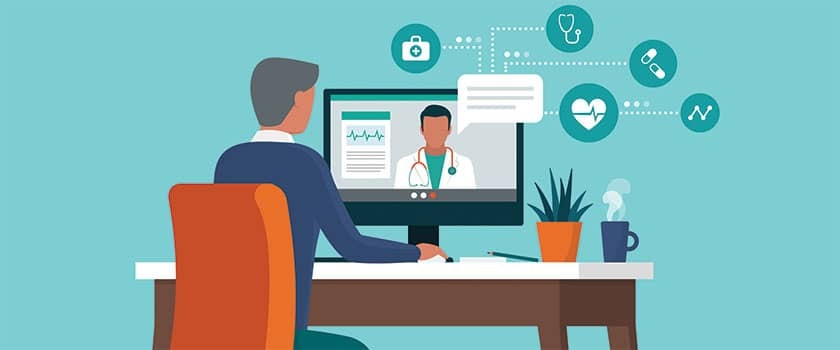
The Ministry of Health (MOH) Singapore defines telemedicine as “the assessment of health, diagnosis, treatment, intervention, or care where the service is provided exclusively over a distance through the use of info-communications technology by a medical practitioner or dentist.”
Telemedicine today is not just a nice-to-have but the need of the hour. The pandemic showed that even the best of health systems can crumble under pressure, and the appointment of certain telemedicine providers for patients recovering from COVID-19 at home proved to be a valuable resource. This was particularly helpful when it came to providing care for patients with chronic ailments such as diabetes and hypertension who do not need to be at a polyclinic or hospital physically. This came at a time when the health system was directing all its efforts towards battling the pandemic.
What are citizen perceptions of telemedicine?
A recent study by Blackbox Research, ”Emerging From The Pandemic: The New Mood In Singapore” showed that Singaporeans are increasingly welcoming of ‘The Digital GP’—or in less fancy words, consulting a doctor online.

To incentivise the usage of telemedicine services, Singapore’s MOH allows using government subsidies and a national medical savings scheme (MediSave) to pay for doctor follow-ups (via video consultations) for approved chronic diseases.
What are the challenges that lie ahead for telemedicine?
The licensing aspect remains the most pressing challenge. In the beginning of 2020, the MOH announced that the telemedicine sector would be licensed by the end of 2022. While regulations already exist to ensure that only a qualified doctor registered under the Singapore Medical Council (SMC) can offer telemedicine services, the telemedicine industry continues to be unregulated.
For example, it remains unclear that in the event of medical negligence or malpractice, where would the legal responsibility lie? With the company providing the telemedicine services, the software used to facilitate the telemedicine service, or the freelance registered doctors? A possible solution to this is telemedicine companies employing their own registered doctors who have their insurance (for malpractice and negligence incidents) in place.
Patient-related challenges include trust concerns, hesitancy to consult a doctor online, privacy issues, and the need for high-speed internet and devices that support these systems. Moreover, there are concerns regarding data collection and breach of health records (e.g., hacking) as well.
Lastly, while certainly of value, telemedicine can never be a replacement for visiting a doctor in-person. Especially for patients with acute ailments that require regular lab tests.
An integrated approach for a healthier Singapore
Telemedicine and conventional consultations need to co-exist and complement each other in order to build an integrated health system that offers the best possible care for patients depending on their unique needs. Stricter regulations in terms of licensing and accountability need to be in place in order to build trust among patients while also safeguarding doctors.
Broadly speaking, the Asia Pacific telemedicine market is expected to increase from USD 10.33 billion in 2022 to USD 27.24 billion by 2027, according to the Asia Pacific Telemedicine Market Research Report. As with all industries spurred on by rapid digitalisation owing to the pandemic, the future for the telemedicine sector is an optimistic one. How fast the industry scales up though depends on the continued involvement of government, businesses, and citizens. A regulatory sandbox approach (live testing of new services in a controlled regulatory environment) that constantly helps identify gaps and opportunities is the ideal way forward, especially in the light of new entrants in the market.
To discover how Blackbox Research can help your business—be it in the telemedicine, healthcare, or insurance domain—uncover critical insights for developing unique and effective strategies in a post-COVID-19 world, write to us at connect@blackbox.com.sg.
Author: Blackbox Research Team
Comments