[photo: Bigstockphoto]
With mass layoffs happening in tech companies and start-ups shaking up the ‘magic growth’ story, the focus for most employees today is to retain their jobs. Of course, this is sometimes out of one’s hands, especially during times of a possible global recession, but there’s still plenty that can be done to make sure one remains an asset to the company and that’s where both soft and hard skills come into play.
The difference between hard skills and soft skills
In a nutshell, hard skills are those that are learnt either through formal education, while working in a job, or via certification and training programmes. This ranges from marketing and human resource-oriented skills to finance and administration-related work. To put it succinctly, it’s essentially what a company hires an employee for based on their training and experience. Even picking up a skillset like learning a foreign language is a hard skill.
Soft skills, on the other hand, are harder to define but essentially refer to abilities and values that help you work within a team and organisational structure. Time management, communication, creativity, negotiation, decision making, and flexibility are some oft-quoted examples of soft skills. Often, even the most talented employees may lack soft skills and that can affect one’s growth and potential in their chosen profession.

Soft skills are even more relevant today where work from home has led to lesser interactions within teams, and while virtual solutions are available, there are studies that support how an increase in social interactions at work can lead to better mental health for employees. On the other hand, excessive social interactions can also impact both productivity and privacy both, so a balance is what’s needed.
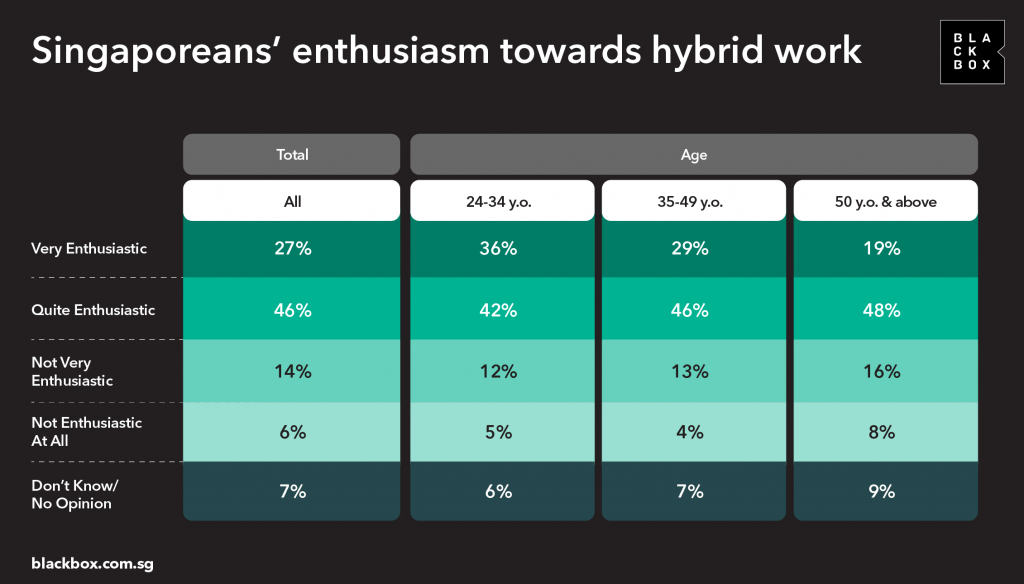
In fact, a mid-2022 Blackbox poll found that most Singaporeans (73%) would prefer a hybrid work arrangement that essentially offers the ‘best of both worlds’, giving people the opportunity to meaningfully utilise their hard and soft skills.
Employers are increasingly looking for abundant soft skills while hiring
A study conducted in collaboration between United Women Singapore and Blackbox Research showed that over 9 in 10 hiring managers are looking for candidates with skills such as problem-solving, communication, collaboration, adaptability, and critical thinking.
Among the 400 female students interviewed in the study, half of them felt that their current educational curriculum doesn’t equip them with the kind of soft skills needed to succeed in the modern workplace. Interestingly, most students who were interviewed seemed eager to learn these skills and understood their importance in today’s dynamic and ever-changing job market.

A holistic way forward
While hard skills relate only to the workplace, soft skills permeate every aspect of our lives. Human beings have complex emotions, and our professional and personal lives can’t always be separated. This is where soft skills come into play even more as employees who are happy at home through healthy communication are likely to be happier at the workplace as well and vice versa.
In fact, the pandemic has served as a wake-up call for many with people realising the importance of interpersonal relationships. Blackbox’s survey highlighted the relevance of this, with 60% of Singaporeans acknowledging the need to better manage personal relations with family and loved ones.
It is clear then that employers will need to strike that elusive balance between productivity and mental health while training employees to be part of the skilled workforce of tomorrow.
While soft skills and hard skills are both critical, a lot more goes into building the workforce of tomorrow. To understand how you can leverage our insights for making better decisions and more effective training programmes, get in touch with us at connect@blackbox.com.sg.
Author: Blackbox Research Team
Comments