
It isn’t just Singapore, but Asia in general has been a perennial laggard when it comes to being open about mental health challenges. There is still a substantial stigma associated with it in this part of the world, and many seem to silently suffer rather than seek professional help.
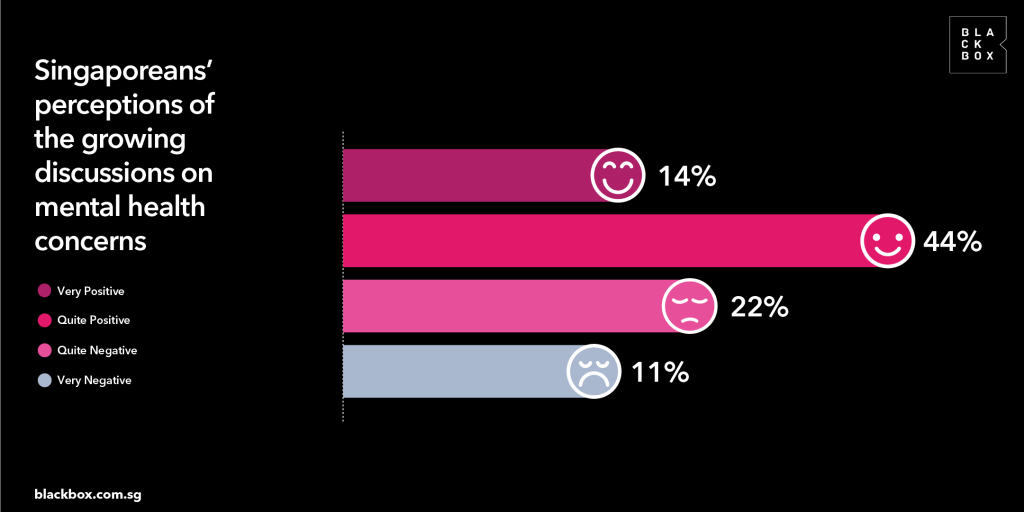
In one among the rare positive outcomes of the pandemic, the discussions around mental health seem to be changing, and for the better. A Blackbox poll revealed that well over half of Singaporeans feel positive about the rise in conversations related to one’s mental wellbeing concerns. The percentage is even higher (64%) among those aged between 20 and 34 years old, indicating greater awareness among the younger generation.
However, our study in collaboration with the Centre for Evidence and Implementation (CEI) also revealed that younger youth (10-14 years) were unsure of who to reach out to for support while older youth (15-18 years) were wary of being perceived as ‘vulnerable’ or not taken seriously by their parents, and tended to manage their issues on their own .
Workplace woes are worsening
A lot has been written recently about the COVID-19 pandemic leading to rising stress and mental health issues in the workplace. In the year that followed the pandemic, a survey ranked the Singaporean workforce as the least happy, with 71% expressing that they feel stressed.
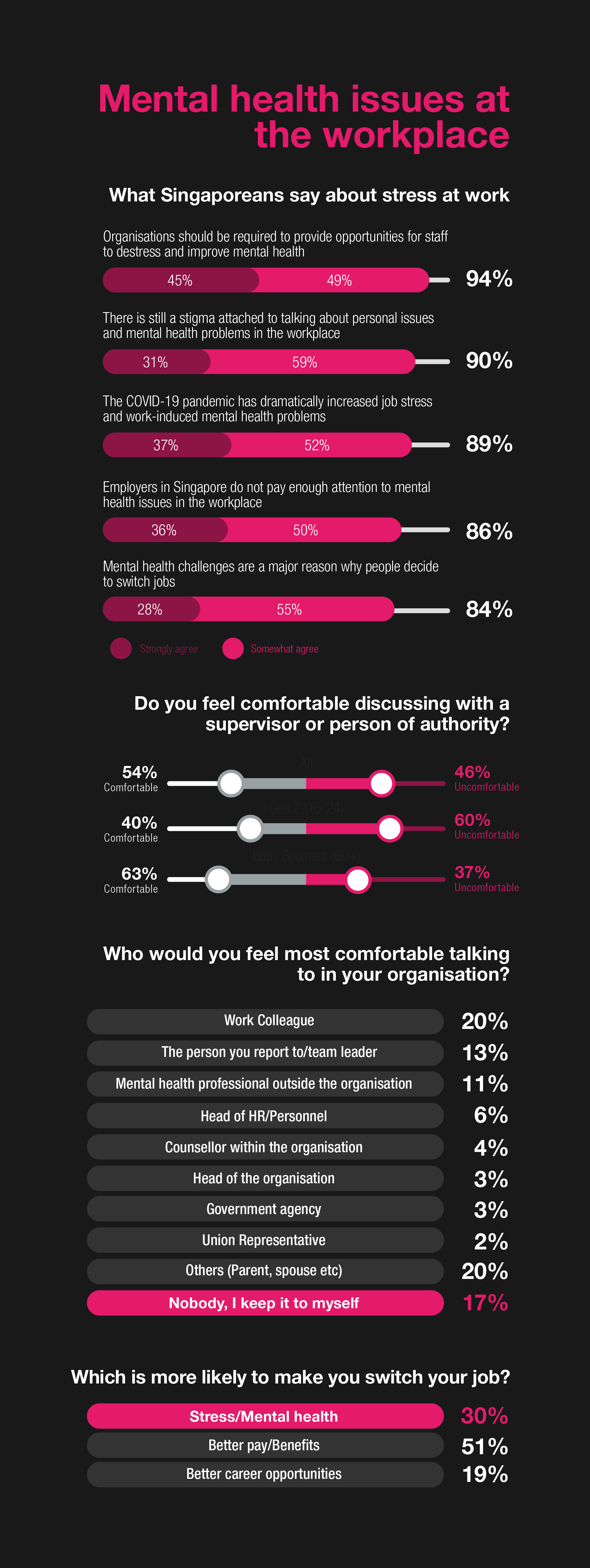
From young professionals to seasoned leaders, workers in Singapore are facing personal and professional challenges – and many are finding it difficult to cope with them. While the data on rising awareness is heartening, speaking up about it seems to be easier said than done. A Blackbox poll showed that 90% of Singaporeans find there is still a stigma around talking about mental stress at work – with Gen Z much more sensitive to this than older generations. Things are getting to a point where ‘Quiet Quitting’ finds a place in the workplace trends of 2022.
In fact, nearly half (46%) say they are uncomfortable bringing up stress/mental health issues with anyone with authority in their organisation. Singaporeans are also more than three times more likely to discuss work-based mental stress issues with a work colleague (20%) or friends and family (20%) than they would to an HR leader (6%), an internal counsellor (4%), or a government agency (3%), and 17% would prefer to say nothing/tell no one.
Social entrepreneurship to the rescue
An idea that provides solutions to a persistent social issue while at the same time incorporates a sound revenue model is a win-win for society and business. That’s where the rising trend of social entrepreneurship comes in.
Given the situation in Singapore, many start-ups are entering the market that offer mental health assistance. Intellect is one such start-up that offers mental wellness programmes and online therapy sessions. The company recently raised an additional USD 10 million in its Series A funding round, for a total investment of USD 20 million so far.
TheShareCo, which is a subsidiary of parent start-up Tueetor, has launched a mobile mental health app in Singapore. It offers on-demand therapy sessions and ensures that clients do not need to wait long periods for an appointment, an aspect that is key for most people looking for support at the right time. There is also a variety of free resources on the app, which people can read through without even registration. The company claims that it already has the largest online, on-demand therapy network in Singapore.
Government initiatives for better mental health
The Singapore Government on its part is acutely aware of the mental health challenges in the island nation as well as the stigma around it. One of the initiatives by the Ministry of Social and Family Development (MSF) during the pandemic was the setting up of a National CARE Hotline (NCH) for providing psychological first aid to callers in distress.
During 2020 and 2021, The National Council of Social Service (NCSS) also increased the funding for three counselling programmes, SYM Academy, Counselling and Care Centre, and O’Joy Care Services in order to meet the increased demand for counselling services. One of the key initiatives of NCSS is the Beyond the Label (BTL) movement, which “amplifies anti-stigma messages and provides various platforms to encourage help-seeking, especially among youths.”
The Interagency Taskforce on Mental Health and Well-being has also been set up to develop a national strategy for mental health so that it is not limited to just the pandemic and there is a long-term vision to address such concerns in the future.
The way forward for mental health in Singapore
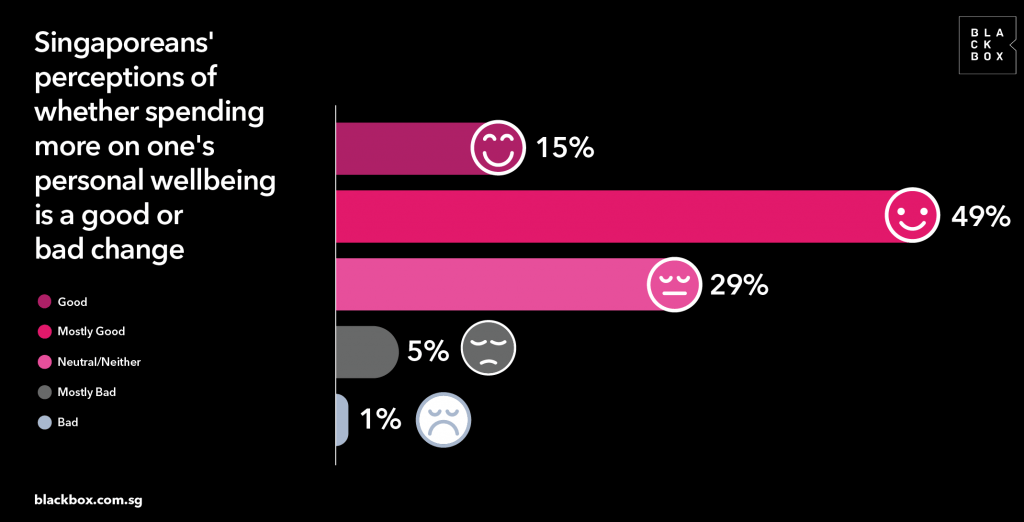
Mental health awareness is undoubtedly growing in Singapore, and is part of the ever-expanding list of health and wellness trends in 2023. Singaporeans are increasingly mindful about the need to invest in oneself and one’s wellbeing. Spending more on one’s well-being is a good change to have arisen from the pandemic, according to most Singaporeans.
While government, personal, and business initiatives are great from an overall mental health perspective, much work remains to be done for such issues to be effectively tackled, especially within a new, more awareness-driven workplace.
The first step is getting Singaporeans to feel comfortable discussing such issues by taking away the stigma from it. HR departments at the workplace will have a key role to play here.
The second step is ensuring that measures and structures are put in place that reflect both the importance of the issue and encourage both employers and employees to view mental health as a legitimate and open topic.
The third, and perhaps final, step is creating awareness for prioritising mental health where people aren’t looked upon as productivity machines but rather as human beings with real feelings and emotions.
Looking to better understand what drives Singaporeans’ views and opinions in the new normal? Write to us at connect@blackbox.com.sg
Author: Blackbox Research Team
Comments