
Sale season is in full swing in the island nation, and with the 9.9 sale having just passed us, there’s still plenty of ‘year-end shopping’ to do with 10.10, Singles Day, Black Friday, Cyber Monday and more expected in the months ahead.
These sale days are eagerly anticipated and all the marketing buzz around them only adds to the festive mood. Especially considering that Christmas and New Year are not too far away from these periods (September to November).
Major e-commerce platforms have started to roll out attractive deals to entice shoppers and will be expected to up the ante in coming weeks as competition intensifies amongst them. From freebies to gifts, crazy discounts and package deals, the best deals this year will no doubt deliver some great savings.

However, this year, the effects of rising costs and inflation have been even more pronounced, with many Singaporeans looking to cut down on purchases. In addition to concerns about inflation impacting consumer purchasing decisions, e-commerce players have to also deal with the added worry of people being able to freely shop offline after two years!
While pre-pandemic was another story altogether, 2022 has been the year of COVID-19’s lasting impact, a world in conflict, and ever-rising inflation.
Last year’s optimism, however, presents a ray of hope.
In 2021, even amidst a raging COVID-19 pandemic, Singaporeans were happy to loosen their purse strings. A Blackbox study data showed that nearly 4 in 5 people (79%) planned to spend either more or the same as they did in 2020, with 44% even saying they are likely to spend more than the previous year.
So, while one may take solace in last year’s numbers, the inflation factor simply cannot be ignored in 2022. Singaporeans are feeling its pinch across a wide range of categories, with e-commerce featuring prominently in that list. A mid-2022 Blackbox poll revealed that 7 in 10 Singaporeans placed e-commerce in the 3-4 category (1 being not at all and 5 being a lot), when asked to self-assess the extent of inflation’s impact on their lives.
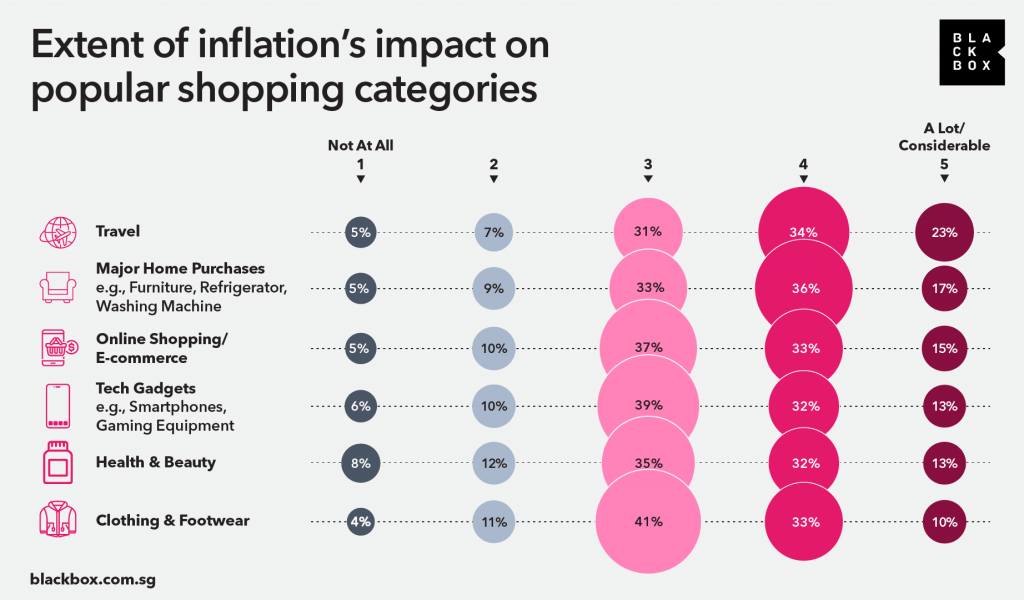
Moreover, over 4 in 5 (82%) in our poll expressed their need to cut down on spending when it comes to e-commerce and online shopping. This number was even higher (84%) in the 35-49 age group, which is usually considered to have more spending power. The gender differences were slight but noticeable with 85% of men expressing a likelihood to restrict their spending in comparison to 80% of women.
Consumer hesitation in spending is also reflected in the performances of the major shopping platforms. Shopee’s pre-EBITDA (adjusted earnings before interest, taxes, depreciation and amortisation) was less than 1% in the second quarter of 2022. A smaller or negative EBITDA means that Shopee is losing its profitability. The poor performances have also led to the real effects of layoffs, twice in 2022 alone. Lazada meanwhile, has seen parent company Alibaba add S$1.28 billion to ensure the shopping platform can steady itself during this inflationary crisis.
E-commerce is an umbrella term that includes the sale of products across a host of categories, ranging from travel bookings to furniture and home purchases to clothing & footwear to technology, health, and beauty products. Top brands across all these categories will be hoping to attract customers with enticing deals and the level of discounts they offer will be the deciding factor for people deciding whether a purchase is worth it or best avoided.

It is hard to change a savings mindset during times of uncertainty, and the final sales figures numbers would offer an interesting glimpse into whether consumer spending habits have indeed changed.
Trends across industries and categories are only as useful as the insights and strategies that one can derive from them. To understand how these can be effectively leveraged for your line of work, drop us a note at connect@blackbox.com.sg.
Author: Blackbox Research Team
Comments