
Post the 9.9 and 10.10 sales, the final segment of the yearly trinity is coming up – 11.11 a.k.a. Singles Day.
Singles Day features in the top 3 “most preferred” year-end sales among Singaporeans, and for good reason. With participating brands such as Amazon SG, Huawei, Klook and Sephora offering massive discounts, consumers are usually enticed to make purchases.
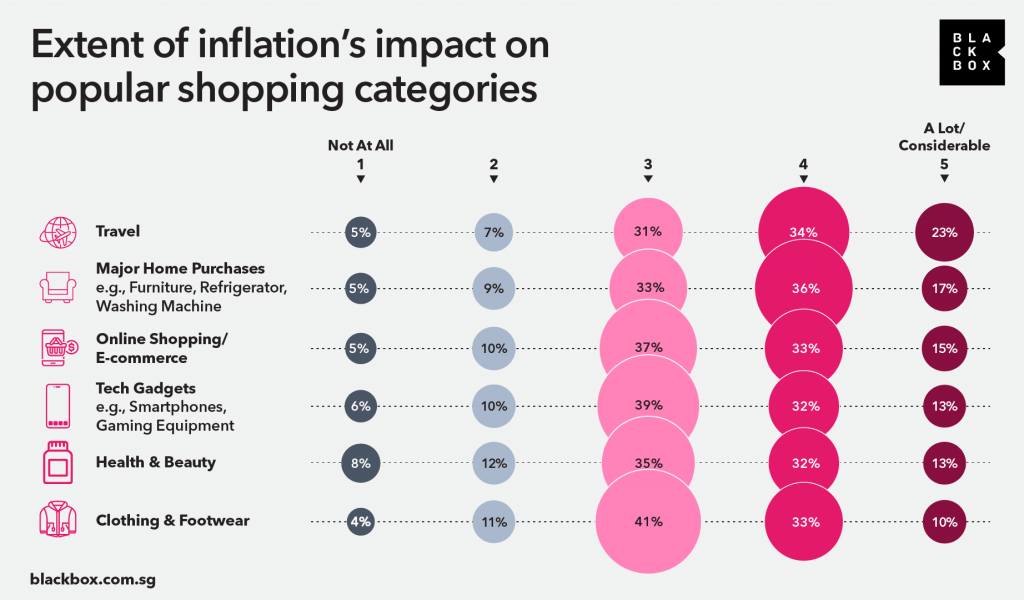
However, this year is different. With inflation gripping the world, and consumers cutting back on spending, it would be interesting to see whether the sales numbers are decent. A mid-year poll by Blackbox shows that consumers are looking to cut back on spending. When asked about the extent to which they are feeling an impact on certain categories, major home purchases, travel, and online shopping were among the top 3.
However, if 2021 is anything to go by, there is hope. E-commerce giant Lazada’s 11.11 sale last year recorded 11 million SGD in sales in just nine minutes!
This was before inflation hit a 14-year high though so it probably can’t be the most reliable predictor of the 2022 iteration of 11.11.
Are Singaporeans getting tired of sales?
Apart from inflation, another concern being highlighted is shopper fatigue. In a recent conversation with Singapore Business Review, FanRu Meng, CEO of Intrepid Singapore, remarked, “There will be shopper fatigue. From a consumer perspective, there’s no more anticipation building up with significant dates to purchase a certain item when every other day, one can expect massive deals and discounts offered.” With the frequency of these mega sales occurring on a monthly basis, each successive sale tends to garner lesser attention from consumers. This is marginal utility at work.
Can e-commerce giants afford the sales?
In recent months, e-commerce giants such as Shopee have cut employees from its Singapore office, impacting its marketing, regional operations, product and engineering, and HR teams. Indonesian employees were also not spared as Shopee cut 3% of its employees in the Indonesian market. Even outside of Singapore, companies such as Pomelo downsized its headcount by 8% while heavyweights such as Amazon and Target are downsizing their e-commerce divisions.
One of the major motivators of these massive sales is the mentality of “growth at all costs”. Many e-commerce companies use sales to capture market share. However, given the economic slowdown, most companies are veering away from a “loss leader” growth strategy. Sustainable profitability and growth have gained more traction within the offices of e-commerce companies. Hence, recent sales have had more muted marketing campaigns. For e-commerce companies, they are hoping that their captured market share has embedded a sense of brand loyalty among their customers and will continue to attract them year after year.
E-commerce is not going anywhere even if companies need to evolve their business strategies to keep up with it. To learn how businesses can continue including the latest consumer trends into their profit model, reach out to us on connect@blackbox.com.sg
Author: Blackbox Research Team
Comments