
Dignity, Freedom, and Justice for all is the overarching theme for 2022’s International Human Rights Day celebrated on 10th December every year. However, with authoritarian regimes still prevalent and flouting of laws even in democratic countries, we’re still quite far from a world where indeed there is dignity, freedom, and justice for everyone.
What are human rights?
This might seem like a basic, straightforward question but the truth is that when we use the term “human rights”, we’re essentially talking about the 13 internationally recognised human rights and freedoms, namely right to education, food, health, housing, work, assembly & association, opinion & expression, and participation in the government. The 5 freedoms include freedom from arbitrary arrest, forced disappearance, death penalty, extrajudicial execution, and torture & ill-treatment.
While focussing on the performance of all countries on each and every right/freedom is beyond the scope of this article, our focus is on the more specific form of human rights—workers’ rights.
Who are the worst performers on workers’ rights?
As per the latest figures from the Global Rights Index 2022, the Middle East and North Africa (MENA) region are the perennial laggards when it comes to workers’ rights. A primary reason for this, especially in countries such as Palestine, Syria, Libya and Yemen, is the ongoing conflict and tensions that are curbing even the basic, fundamental rights of workers. In Qatar, Saudi Arabia, and the United Arab Emirates, human rights abuses continue unabated.
In fact, even the recent FIFA World Cup in Qatar was called out by several human rights organisations as well as members of the general public for alleged violations of human rights. In the 19 countries surveyed within the MENA region, 84% of them restricted free speech and assembly; 95% violated workers’ right to hold a strike; and all 19 countries (100%) impeded the registration of unions.

The Arab region was also home to 40 million migrants (as of 2019), many of whom lost their jobs in the pandemic, were unable to travel back to their home countries, and not given adequate compensation due to being unable to work. This is compounded by the presence of the kafala (sponsorship) system in several Arab countries that enable the wanton detention, arrest, and deportation of migrant workers.
It’s not looking too good for Asia either
While MENA takes the top spot for poor performance on workers’ rights, Asia-Pacific comes a close second. In fact, three Asian countries—Bangladesh, The Philippines, and Myanmar—feature in the list of ‘ten worst countries in the world for working people’.

The reasons for this are manifold. In Bangladesh and Pakistan, for example, striking workers were brutally handled by the police and in Hong Kong, pro-democracy organisations and trade unions were silenced by the authorities. China’s treatment towards its ethnic minorities is common news now too, and many members from such communities were coerced into becoming labourers in the garment industry, leading to routine violations of civil liberties in the form of detention and brute force.
On the topic of the garment industry, over 500,000 workers employed in Bangladesh’s export processing zones were disallowed from forming or joining trade unions.
As per data from the global rights index, 83% of countries in Asia-Pacific arrested and detained workers, while 91% impeded the registration of unions. This is more alarming in the context that many of these countries claim to be democracies, at least on paper.
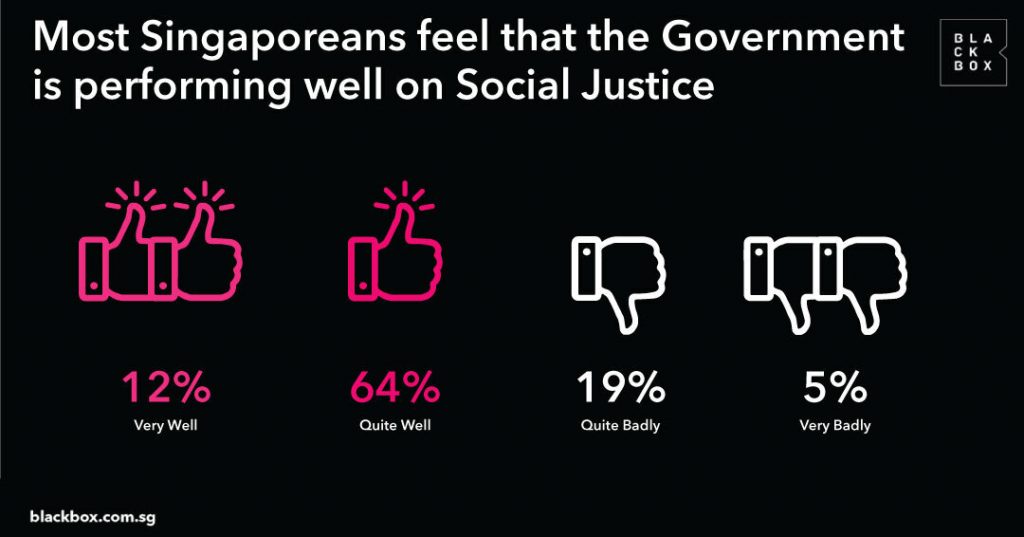
Singapore, however, seems to have done its fair share for migrant workers, unveiling a host of measures in 2022 itself. A mid-year Blackbox poll showed that a majority of Singaporeans (76%), too, back the government in its efforts to ensure greater social justice, so it is clear that such measures are resonating with the public.
But even here, during the height of the pandemic, several concerns were raised about the discrimination towards migrant workers when it came to easing of lockdowns and restrictions. The truth, then, remains that no country’s response towards the most marginalised among us in society has been perfect, and there’s a long way to go before we can call ourselves a truly inclusive society where human rights are fair and equal for all.
A world where even one person is denied basic human rights is an unfair one, and if we have to move towards a better future, then the time to act is now. For more insights that help you understand how data drives everything today, from policy to business, get in touch with us on connect@blackbox.com.sg
Author: Blackbox Research Team
Comments