
As Lawrence Wong is appointed as Singapore’s newest Deputy Prime Minister (DPM), reaffirming his status as the PM-in-waiting, he faces a potentially uphill task as he guides Singapore into the future. In Blackbox’s recent polling survey in May 2022, Singaporeans highlighted issues of cost of living and inflation as the key issues that Lawrence Wong’s future administration needs to tackle.
Decisions will not rest solely on Lawrence Wong’s shoulders
Unlike the political structures of other countries, DPM Wong will not make decisions by himself. Singapore’s political structure ensures that policy decisions are made on a consensus basis with the Cabinet providing support and deliberation on policy matters.
As Prime Minister (in-waiting), DPM Wong’s role would be to set the overall policy tone and direction, which will serve as a reference for the cabinet and civil service. Past Prime Ministers have also done this—with former PM Goh Chok Tong pushing for a more consultative style of leadership and his successor and current PM, Lee Hsien Loong, continuing the increased public engagement on policy matters.
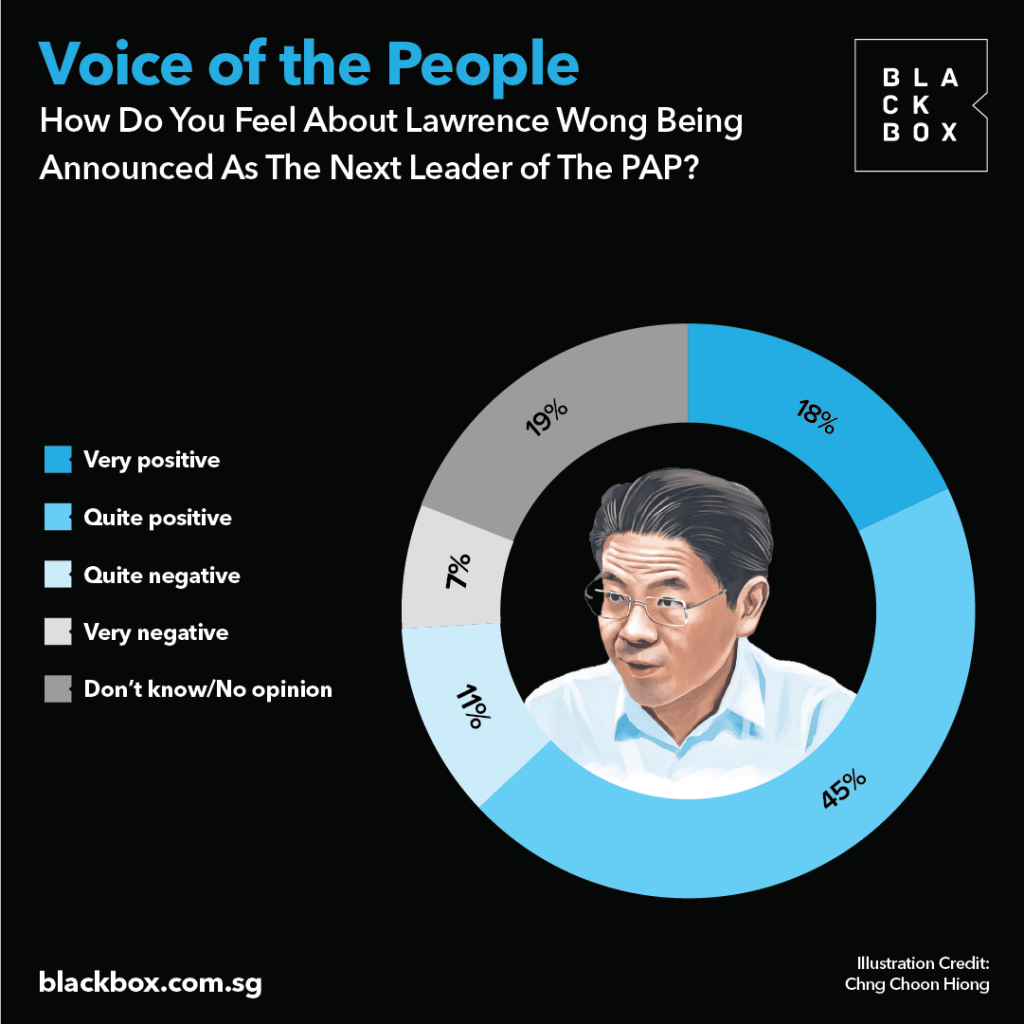
While DPM Wong largely has the support of Singaporeans with 63% of Singaporeans feeling positive about him leading the People’s Action Party (PAP) and becoming Prime Minister, he will need to demonstrate decisive leadership like his predecessors for the public service to take reference from considering Singapore’s future policy challenges.
When will the prices stop increasing?
Inflation has begun to hit households in Singapore hard. Based on Blackbox’s May 2022 polling, 91% of Singaporeans say that rising inflation rates are impacting their lives in some way. Worryingly, 37% of Singaporeans say inflation has a significant impact. Inflation now ranks second at 26% behind cost of living (33%) when Singaporeans were asked about the biggest threat the city-state is facing today.


Inflation is manifesting itself in key areas including petrol prices, home utilities, supermarket prices, and at food courts or coffee shops. This is concerning as these areas are, by and large, part of Singaporeans’ daily lives.

The dangerous aspect of today’s inflation lies in the fact that inflation is a global phenomenon now. While many have pointed out potential causes such as China’s slowing economy, the world reopening post COVID-19, and the ongoing Russian-Ukraine war impacting wheat and animal feed prices, the fact remains that inflation was an expected and eventual outcome.
During the COVID-19 pandemic, particularly in 2020, governments globally went on a massive fiscal expenditure spree. Millions were spent on medical equipment, unemployment handouts, and other policies to cushion the economic impact of the pandemic on people. Singapore alone spent SGD 31.9 billion in 2020 on COVID-19 relief policies.
There are limitations on how much governments can spend to alleviate the crisis. Extreme expansionary fiscal policies will be a heavy burden for future governments and inflation is merely a symptom of the effects of such fiscal spending.
One of the massive challenges facing Lawrence Wong’s future administration is to address Singapore’s massive COVID-19 relief expenditure. Potential future policies will need to alleviate the immediate effects of inflation while rebuilding Singapore’s fiscal position. Conversations have been held to introduce a wealth tax and increase the Goods and Services Tax (GST) and income taxes. Part of these tax receipts would also be transferred to lower-income Singaporeans.
A key question would be what is a fair taxation rate? Traditionally, the criterion of equity is used to provide moral guidance on the fairness of tax burdens. This simply means that those who have benefitted more from taxation and can pay more taxes should pay more.
However, such criteria lack nuance as no consideration is made on what tax revenue is used for, thus the fairness of government expenditure is ignored.
A progressive tax rate structure as seen with Singapore’s income tax structure, on its own, cannot tell us if the tax system is fair or just. Therefore, simply introducing wealth taxes and increasing GST and income tax rates are not straightforward solutions to tackling inflation.
Singaporeans seek gainful employment
Economic performance remains at the centre of the Singaporean psyche. According to Blackbox’s May 2022 polling, employment/jobs as well as wages or salaries at 21% and 16% respectively remain some of the pertinent issues for Singaporeans personally. Such concerns are not unwarranted. The realities of inflation and economic uncertainty that started in 2020 and have persisted till now have real implications on the daily lives of Singaporeans.
One should not misinterpret Singapore’s current unemployment rate of a low 2.2% in 2022’s first quarter (as reported by the Ministry of Manpower in April 2022) as there being no employment problems.
Concerns remain about the government’s immense fiscal expenditure, which included a temporary mass hiring into the healthcare sector as well as the much-maligned Safe Distancing Ambassadors (SDAs) programme. Such temporary employment opportunities can only provide temporary income relief.
Additionally, many have rightfully pointed out the lack of relevant experience SDA roles provide for future employment. With Singapore lifting its restrictions in 2022, many ex-SDAs are now struggling to find employment opportunities.
Lawrence Wong’s future administration has the difficult task of ensuring that Singaporeans have access to “good jobs”, ideally jobs that remunerate well and fully utilise the various skillsets that Singaporeans have in a meaningful way. This task is made more difficult since most Singaporeans believe the government has done well addressing employment and wage concerns and they would expect Lawrence Wong to continue delivering good results on these two fronts.
One avenue to address employment concerns would be the various retraining programmes that were launched at the peak of COVID-19. Work-study programmes and industry or mid-career transition programmes might prove useful in providing good job opportunities to Singaporeans by reallocating them to growth industries.
However, caution should be advised against overpromoting “skills retraining.” Many Singaporeans are wary of reskilling or upskilling programmes as these programmes do not necessarily lead to better employment outcomes. Lawrence Wong’s future employment policies need to focus on improving actual employment outcomes rather than promoting enrolment into courses.
Is a housing bubble inevitable?
Singaporeans in general believe that the city-state will do well going forward. However, many have expressed concerns that Singapore is becoming an unaffordable place to live in. According to Blackbox’s May 2022 polling results, 66% of Singaporeans expressed negative sentiments about rising Housing & Development Board (HDB) flats prices. Among those polled, 53% feel negatively about delays in Build-to-Order HDB flats, although 62% of Singaporeans were positive about the proposed 6,000 new HDB residences at the Greater Southern Waterfront.
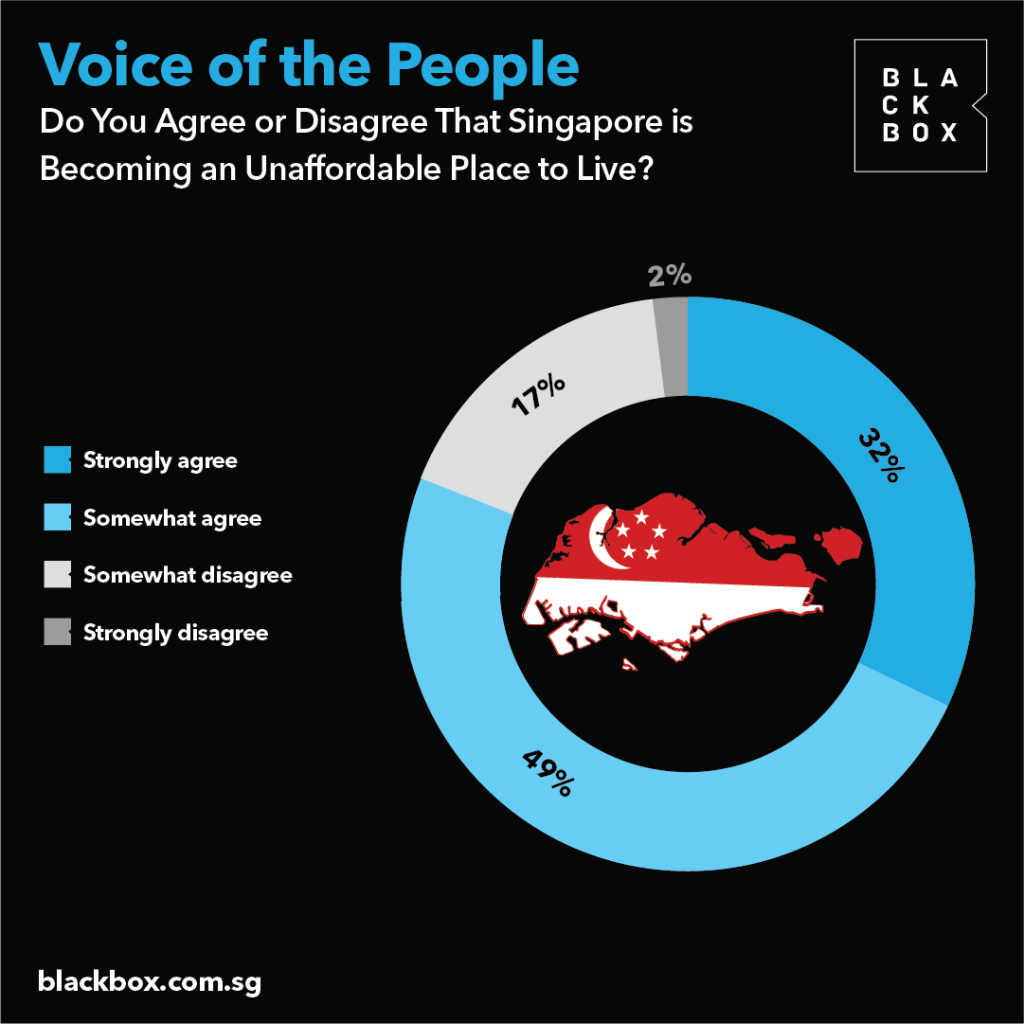
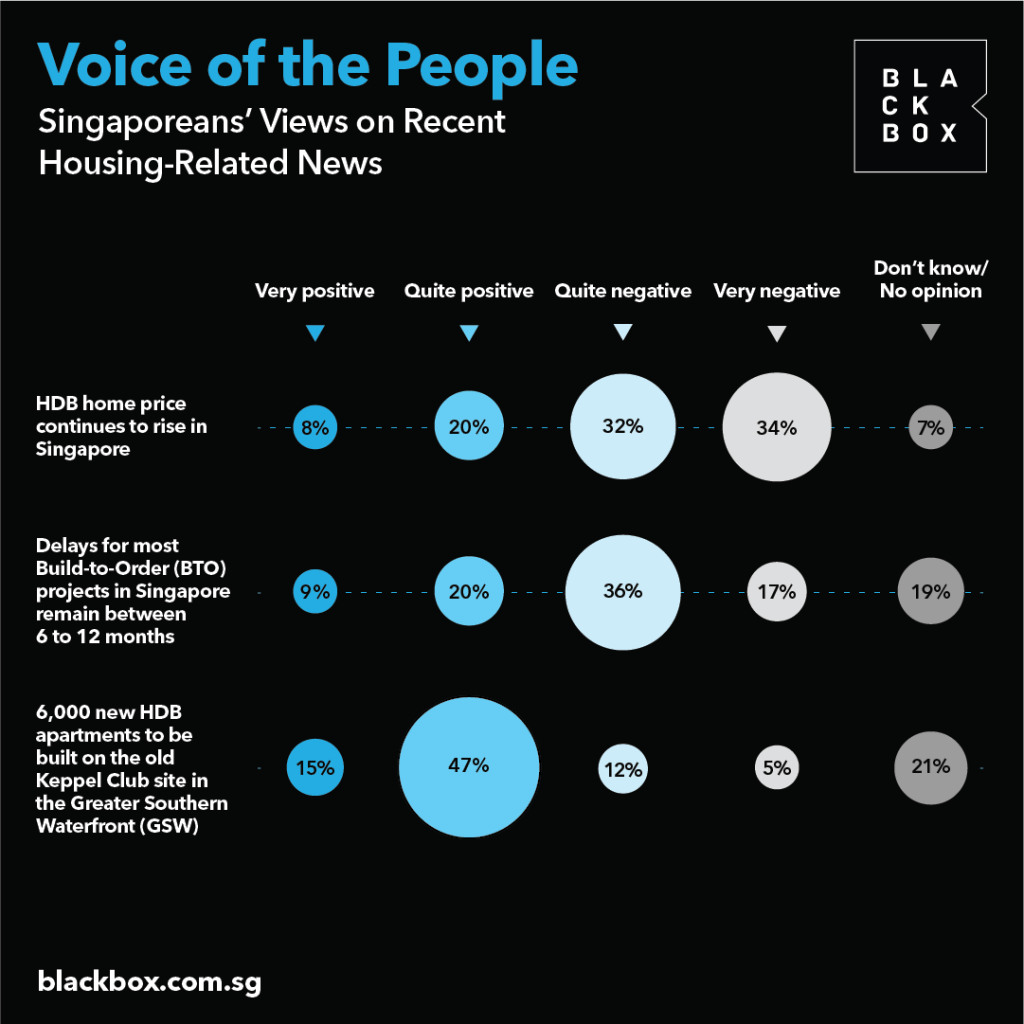
One of the concerning dilemmas facing Lawrence Wong’s future administration is the tension between a desire for affordable housing and a desire for increased valuations for HDB flats. For many Singaporeans, HDB flats are seen as a potential investment opportunity. The ‘flipping’ activity where Singaporeans receive a Build-to-Order (BTO) HDB flat, reside in it for 5 years then sell it for profit, is a common activity. Flipping has certainly had an upward pressure on HDB flat prices and many Singaporeans, especially younger or lower income people fear being priced out from owning a home.
Explorations should be made into understanding the concept of affordable housing, what constitutes affordability, and whether Singaporeans are looking for a home or a house. While the former evokes an emotive and long-term response, the latter is commonly seen as an investment opportunity to flip and profit.
Tough times ahead but DPM Wong can manage
While issues of inflation and housing affordability are of high concern to Singaporeans, DPM Wong and his team have the policy tools to alleviate these concerns. Working closely with the Ministry of Finance (MOF) and Monetary Authority of Singapore (MAS) will be important as the government introduces changes to taxation and monetary policies to combat inflation.
Lawrence Wong can also rely on the good foundation laid by agencies such as SkillsFuture Singapore (SSG). The relative popularity of training and apprenticeship opportunities created by SSG has demonstrated that Singaporeans are willing to develop themselves if they can get the necessary support.
Housing might prove to be the most pressing problem for DPM Wong’s future administration. While cooling measures can be reintroduced with greater intensity to alleviate affordability concerns, there is also the philosophical question of what an HDB flat is supposed to be: a home where Singaporeans can live or a house in which Singaporeans can invest in?
To discover how Blackbox Research can help your government uncover critical insights about your citizens for developing unique and effective strategies and policies, write to us at connect@blackbox.com.sg.
Author: Blackbox Research Team
Comments